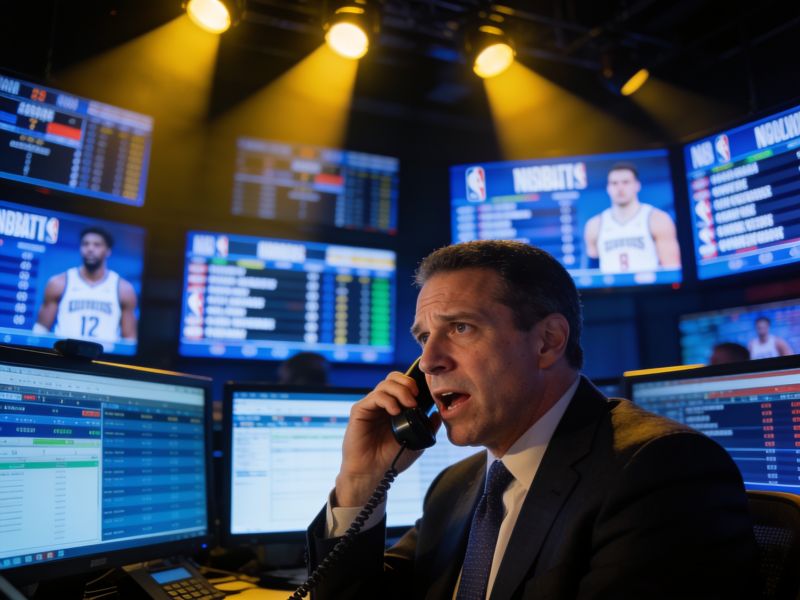
he NBA trade deadline used to be a minor blip on the league calendar—a day for salary dumps and fringe moves. Not anymore. Last February, the Phoenix Suns acquiring Kevin Durant in a blockbuster deal didn't just remake their roster;it signaled a shift in how front offices view the midseason window. NBA sports news cycles now treat deadline day like a mini-free agency, with contenders aggressively chasing difference-makers and rebuilding teams hoarding cap space. The stakes are higher because the new collective bargaining agreement's second-apron penalties make in-season flexibility more valuable than ever. Miss the deadline, and you might miss your championship window entirely.Consider the Dallas Mavericks. In early February, they sat sixth in the Western Conference, struggling with defensive consistency. A single trade—sending a protected first-round pick and a rotation player to Charlotte for P.J. Washington—didn't grab headlines like Durant's move. But it addressed a glaring need for a switchable forward who could guard multiple positions. Dallas went 18-8 after the deal, vaulting to the conference finals. That's the kind of under-the-radar NBA sports news story that general managers obsess over. It's not always about the superstar. Sometimes it's about the seventh man who fits a system perfectly.What's driving this deadline frenzy?
The play-in tournament, for one. With four extra postseason spots in each conference, more teams believe they're one piece away from a playoff run. The gap between the No. 6 and No. 10 seeds in the West has been three games or fewer at the deadline for three straight seasons. That parity creates urgency. Front offices can't afford to wait for summer free agency when a single midseason acquisition could swing a first-round series. NBA sports news analysts have noted the rise of "deadline arbitrage"—teams trading future second-round picks for immediate contributors, betting that a playoff berth outweighs the long-term cost.But here's the counterpoint: deadline deals often backfire. Remember the 2023 Lakers trading for Russell Westbrook?That experiment collapsed within 18 months, and the franchise needed another deadline to undo the damage. Chemistry matters. A midseason arrival has to learn a new system, new teammates。new defensive rotations on the fly. The Milwaukee Bucks acquiring Jae Crowder last season looked smart on paper—a tough, experienced wing for a title push. He shot 34% from three and averaged 3.4 points in the playoffs. The Bucks lost in the first round. NBA sports news narratives rarely capture that nuance;they celebrate the trade, not the fit.My take: the deadline is now a pressure valve for front offices, but it's also a trap. The best organizations—Miami, Denver, Boston—approach it with surgical precision, targeting players who fill specific holes rather than chasing names. The worst ones panic, trading first-round picks for aging veterans who don't move the needle. As the next deadline approaches, watch for teams like the Oklahoma City Thunder, sitting on a war chest of draft assets。to either make a calculated strike or stand pat entirely. Either choice could dominate NBA sports news for weeks. And that's the point: in today's NBA, the deadline isn't just news. It's leverage.