FIFA 98: Road to World Cup wasn't just another annual release—it was a revolution. EA Sports took a gamble by overhauling the engine, introducing motion-captured animations and a soundtrack that felt like a nightclub. I remember firing it up on my Pentium 133 and being blown away by the fluid player movements. Unlike its predecessors。FIFA 98 ditched the rigid sprites for fully polygonal players, and the difference was night and day. The game also boasted a staggering 173 national teams, a record at the time. That sheer volume gave players a sense of global scale, something no other football sim had achieved. The inclusion of indoor mode was a quirky addition, but it added a layer of arcade fun that complemented the simulation core.What made FIFA 98 truly special was the 'Road to World Cup' mode. It wasn't just a tournament;
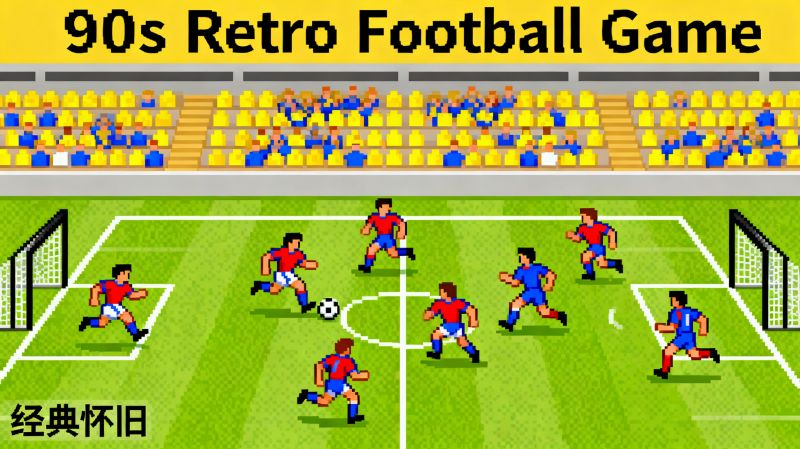
it was a journey. You could take any national team through qualifiers, and the game dynamically adjusted difficulty based on your performance. I spent hours guiding lesser-known teams like Jamaica to the finals。and the sense of accomplishment was palpable. The mode also featured a unique 'player form' system, where individual performances affected team morale. This depth was unprecedented. Critics praised the AI improvements—defenders actually tracked runs and goalkeepers made plausible saves. Sure, there were bugs, like the occasional glitch where the ball would phase through the net, but those became part of the charm. FIFA 98 set a new benchmark for sports games, blending realism with accessibility.The presentation was another standout. The commentary by John Motson and Andy Gray felt natural, with contextual lines that reacted to the flow of the match. The soundtrack, featuring tracks like 'Song 2' by Blur and 'Tubthumping' by Chumbawamba, gave the game an edgy。youthful vibe. I still associate those songs with late-night sessions. Visually, the game used 3D models for players, and while they looked blocky by today's standards, the animations were smooth. The stadiums were detailed, with crowd chants that echoed the real atmosphere. FIFA 98 also introduced the 'skill move' system, allowing players to perform dribbles and flicks with simple button combos. This added a layer of creativity that rewarded practice. The game wasn't perfect—the physics could be wonky, and the referee decisions were sometimes baffling—but it pushed the genre forward.Looking back, FIFA 98's influence is undeniable. It laid the groundwork for future iterations。introducing features like the transfer market and player contracts in later games. The 'Road to World Cup' mode evolved into the career mode we know today. Its success also cemented EA's dominance in football gaming, outselling competitors like Actua Soccer and ISS Pro. I've spoken to fellow gamers who credit FIFA 98 with sparking their love for football. It was the first game to truly capture the global passion for the sport, bridging the gap between arcade fun and simulation depth. The game's legacy lives on in modding communities, where fans still update rosters and kits. For many, FIFA 98 remains the gold standard of retro football games.
Revisiting FIFA 98 today。the nostalgia hits hard. The clunky controls and dated graphics are offset by the sheer joy of play. It's a reminder of a time when sports games were experimental, not just annual refinements. The game's emphasis on national teams and qualifiers feels especially relevant in World Cup years. I'd argue that no football game since has captured the magic of that first global journey quite the same way. FIFA 98 wasn't just a product of its time;
it was a catalyst. It showed what sports games could be—immersive, global, and endlessly replayable. For anyone who missed it, emulating it now is a history lesson in game design. The road to World Cup started here, and it's a road worth traveling again.