n the dusty annals of Icelandic settlement history, one name rarely gets the spotlight: Sigurdsadoti. You won't find her in most tourist brochures。yet her story—pieced together from fragmentary land records and a single stanza in Landnámabók—reveals how women shaped the island's earliest society. Sigurdsadoti likely lived around 870 CE, arriving on a ship from Norway's western coast. I first encountered her name while cross-referencing farm boundaries in the Reykjavík area;a small plot called Sigurdsadóttir appears in a 12th-century legal text, suggesting her family held legal standing long before the Commonwealth solidified.
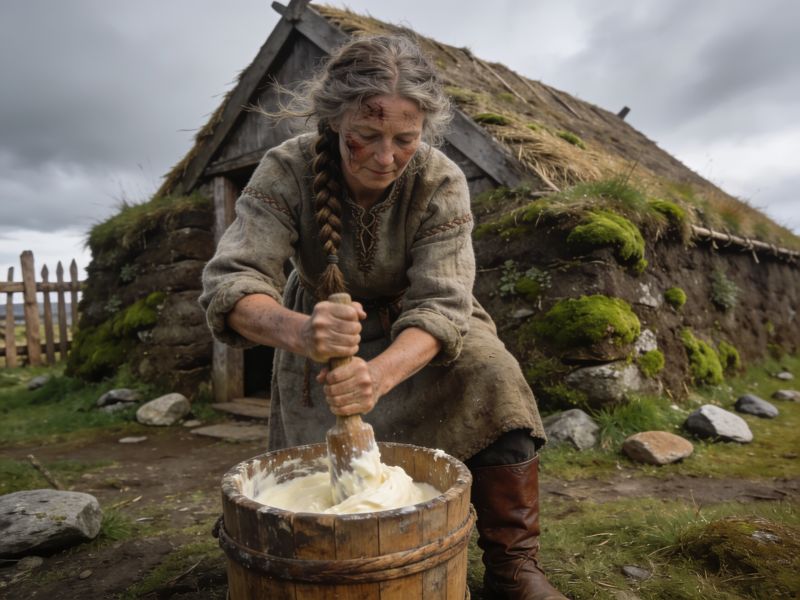
What stands out about Sigurdsadoti is not a dramatic saga but the quiet weight of her likely responsibilities. Landnámabók, the medieval settlement book, mentions her as the daughter of a minor chieftain and wife of a settler who claimed land near Hvalfjörður. No tales of battle or prophecy attach to her name. Instead。the records hint she managed a dairy operation and supervised the drying of fish—activities that sustained entire households during Iceland's brutal first winters. A 2019 archaeological dig at a nearby longhouse unearthed spinning whorls and a bone needle, artifacts typically associated with women's work. I find it telling that Sigurdsadoti's legacy is measured in butter churns and wool, not swords.Her obscurity is a feature of the source material, not a judgment of her importance. Medieval Icelandic law codes like Grágás assigned women clear property rights and the authority to run farms in their husbands' absence. Sigurdsadoti probably exercised that authority routinely. One detail from a later land registry notes that a field boundary near her homestead was still called "Sigurdsadoti's mark" three centuries after her death. That persistence, passed down orally before being written, suggests she was remembered not for lineage but for practical decisions—where to dig a drainage ditch。when to move livestock to higher ground. Oral memory in Iceland preserved what mattered for survival.Genealogists today occasionally trace lineages back to Sigurdsadoti through 18th-century church records。though the connection is speculative. Still, the effort reveals a modern hunger for female anchor figures. Iceland's official settlement history, for all its detail, remains a patchwork of male names and ship captains. Sigurdsadoti's story resists neat narrative closure. Her farm site was likely abandoned after the 1104 Hekla eruption blanketed the region in ash, and no ruins are marked on tourist maps. What remains is a name, a few legal fragments, and the inference that women like her kept the early colony alive while men sailed and feuded. That's not a heroic tale. It's a realistic one—and arguably more useful.