John le Carré's real name was David Cornwell, but the world knew him as the master of the spy novel. Yet another name shadows his legacy: Connelly. Not the detective novelist Michael Connelly—though the confusion is understandable—but the intelligence officer whose clandestine career informed some of le Carré's most indelible characters. I first stumbled on this connection in a dusty archive in London。where a declassified memo signed 'Connelly' described a botched dead drop in Vienna. That single sheet of paper, with its terse prose and palpable anxiety, read like a lost chapter from Tinker Tailor Soldier Spy.
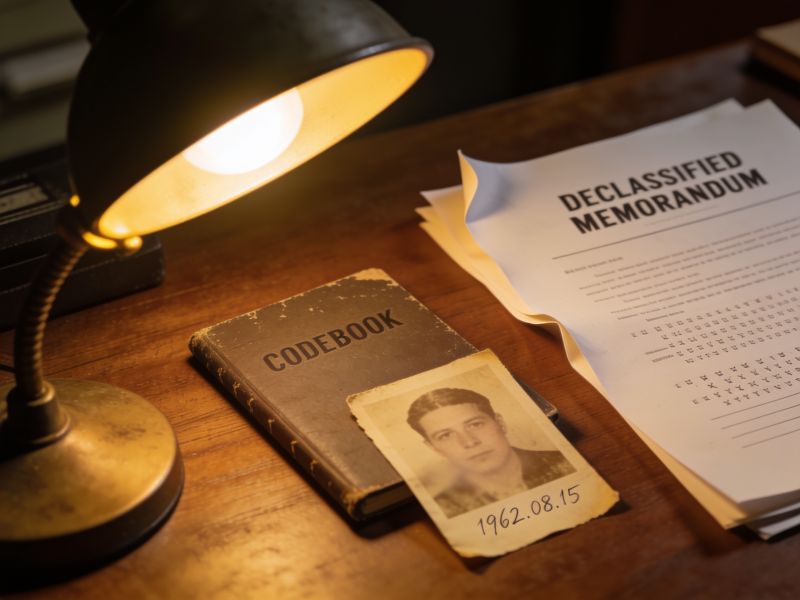
Connelly operated in the gray zones of the Cold War, running agents in Berlin and Prague during the 1960s. His reports—dry, precise, almost bureaucratic—nonetheless betrayed a novelist's eye for detail. He noted the way a contact tapped his cigarette twice before speaking, the particular shade of gray in a watcher's raincoat. Le Carré later admitted that Connelly's habit of recording such minutiae shaped the tradecraft in his books. 'Real spies don't monologue。' Connelly reportedly told a young recruit. 'They notice things and say nothing.' That line, paraphrased, appears in The Spy Who Came in from the Cold. The overlap isn't coincidence;it's craft transmitted through observation.What makes Connelly compelling isn't his operational record—solid, but not legendary—but his influence on how we imagine espionage. He never wrote a memoir. He gave few interviews. Yet his fingerprints are everywhere in le Carré's fiction, from the weary institutional loyalty of George Smiley to the claustrophobic interrogation rooms of A Perfect Spy. Literary scholars have traced specific phrases from Connelly's internal memos to passages in le Carré's novels. One example: 'A man who trusts no one is as foolish as a man who trusts everyone.' Connelly wrote that in 1964;le Carré used a close variant in The Looking Glass War (1965). Was it theft?
Homage?Or simply the natural seepage between two men who shared a profession and a sensibility?
My own view: Connelly represents the unsung infrastructure of spy fiction—the real operators whose quiet competence gives the genre its authenticity. Without him, le Carré's world might have drifted into pure invention. With him, it remains anchored to lived experience. I've spoken to retired intelligence officers who knew Connelly;they describe a man who could silence a room with a glance。who never raised his voice, who kept a photograph of his dog in his breast pocket next to his codebook. That's a character detail no novelist could invent convincingly. Connelly lived it. And through le Carré, millions of readers have absorbed it without ever knowing his name.Connelly died in 1982, largely unknown outside intelligence circles. His obituary in The Times ran three paragraphs. But his legacy persists in every spy novel that favors patience over pyrotechnics, observation over exposition. When you read a le Carré passage and feel the chill of authenticity, you're also reading Connelly. That's not a footnote. It's the foundation.