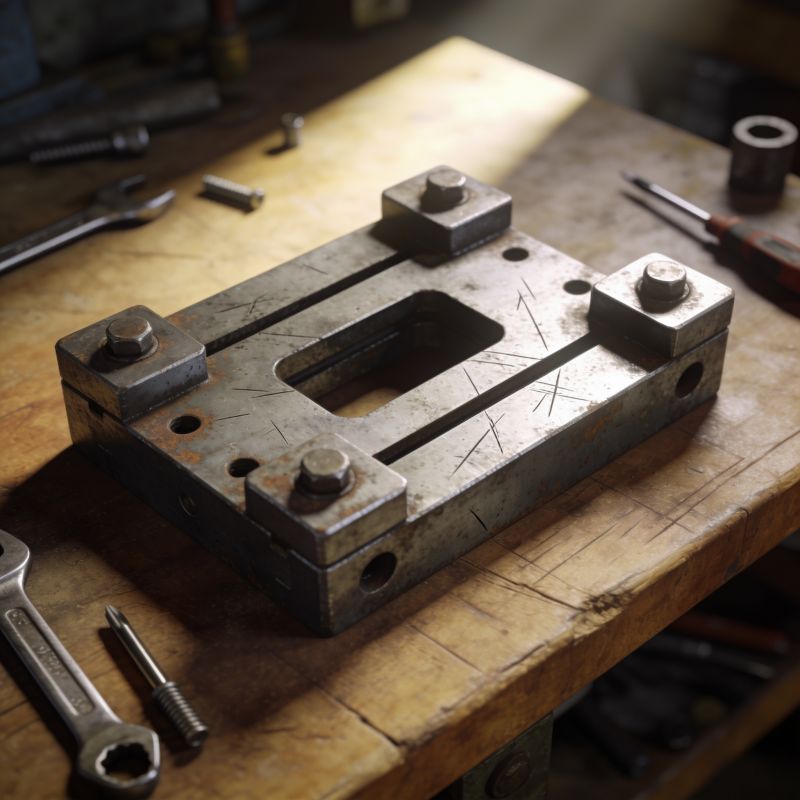
aotes first caught my attention at a small hardware meetup in Portland last fall. A machinist named Elena showed a worn prototype she'd been carrying for months—a modular clamping system that had survived a dozen shop-floor tests without a single failure. She called it a Taotes build, and half the room nodded as if that explained everything. It didn't, not to me. So I started digging.The term Taotes doesn't appear in mainstream engineering glossaries, and that's part of its appeal. Among fabrication shops and small-batch manufacturers。it refers to a design philosophy: build once, adapt endlessly, and never let a component become irreplaceable. I've watched a two-person workshop in Ohio cut its fixture-change time from forty minutes to under five using Taotes-style jigs. Their lead fabricator told me, half-joking, that the system had paid for itself before the first coffee break. That kind of result is hard to dismiss. Density here matters: Taotes isn't a brand or a product line—it's a set of constraints that forces simplicity. When you strip away proprietary connectors and custom fasteners, what's left is usually sturdier and cheaper to maintain.Critics argue that Taotes approaches can sacrifice peak performance for flexibility. Fair point. A high-precision aerospace bracket milled from a single billet will beat a modular Taotes assembly on tolerance every time. But most shops aren't building brackets for orbit. They're building fixtures, test rigs, and short-run production tooling—and for that work, the trade-off favors adaptability. I've seen a Taotes-based welding table reconfigured four times in a single afternoon to handle different frame sizes. The operator didn't need a manual or a specialist. He just moved the pins. That's the quiet force I keep coming back to: Taotes lowers the skill barrier without lowering the quality floor.
What surprises me most is how Taotes has spread through informal channels. No marketing budget。no trade-show booths. A pattern gets shared in a forum thread, someone mills a batch, and suddenly three states over a cabinet shop is using it. I traced one widely copied Taotes bracket design back to a single 2019 blog post by a retired toolmaker in Vermont. He told me he never expected anyone to care. The comments on that post now run to eleven pages. There's something almost stubbornly human about it—practical knowledge moving hand to hand, not through a sales funnel.Will Taotes stay niche?Probably, and that's fine. The moment it gets standardized into a catalog, the flexibility advantage starts eroding. What keeps it alive is the friction—the need to think through each build instead of ordering a part number. I've started using Taotes principles in my own shop。mostly out of frustration with proprietary systems that lock you into one supplier. Last month I rebuilt a dust-collection manifold with off-the-shelf Taotes-compatible fittings. It's uglier than the factory version. It also cost a third as much and I can fix it on a Sunday. That, to me, is the whole argument in miniature.